Of which 4.5 g sugars and 3 g saturated fat.
Values are for the first option listed in the ingredients; substitutions and variations change them. Carbs exclude fiber; energy uses the EU conversion factors (fiber at 2 kcal/g). Source for sugars and saturated fat: Portuguese Food Composition Database (Base de Dados da Composição de Alimentos), Instituto Nacional de Saúde Doutor Ricardo Jorge, I. P. — INSA, v 7.1 - 2026.
Quantities and times are a starting point: adjust them to your taste. Two things don't change: poultry and ground meat must be cooked all the way through, and allergens — always check the labels.
Highlights Raw pistachio pesto · Shrimp cooked separately · No cream and no cheese
Allergens gluten, crustaceans (shellfish), tree nuts
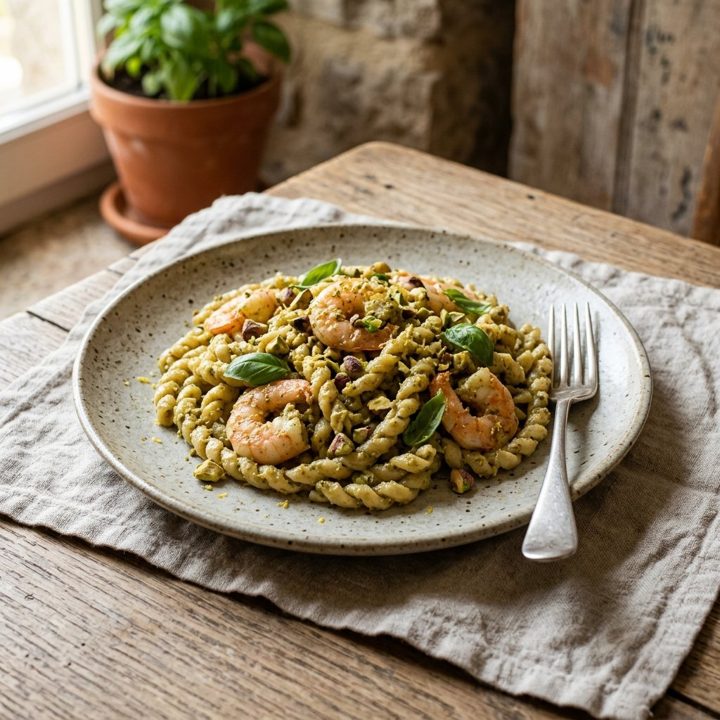
Busiate with pistachio pesto and shrimp
Pistachio pesto without basil taking over; the shrimp go in at the end
A contemporary Sicilian pairing: busiate, briefly sautéed shrimp and a pesto of pistachio, olive oil, basil, lemon and a little garlic. The pesto goes in off the heat, as a raw sauce; the shrimp come out as soon as they're cooked and return only at the end.
Ingredients
- 320 g (11½ oz) dried busiate
- 300 g (10½ oz) raw shrimp, cleaned
- 100 g (3½ oz) unsalted pistachios
- 40 g (1½ oz) extra-virgin olive oil
- 15 g (½ oz) fresh basil
- 2 g lemon zest
- 8 g lemon juice
- 3 g garlic
- 0.3 g black pepper
- 1 g salt
- water and coarse salt for cooking the pasta, as needed
- 40 ml (2½ tbsp) cold water — for the pesto
Method
- Keep the shrimp at ≤4 °C (39 °F). Remove the shells and veins, rinse quickly in cold water and dry very well. Set aside four for finishing only if they're a similar size.
- Toast 15 g of the pistachios in a dry skillet for 2 minutes and set aside. Let them cool before chopping coarsely.
The full method (10 steps), Rico's tip, the variations and storage are in the ebook “Pasta”.